Archive

Milwaukee Riverkeeper was recently awarded $47,400 to put Milwaukee on a “Low Salt Diet” by monitoring salt levels in area rivers and changing the practices of private salt applicators who account for more than 50%[...]

Gift a gift with the twice the impact this holiday season. Shop and support Great Lakes Waterkeeper organizations at the same time!

We, as a community, need to come together with our city leaders and leaders at MMSD to aggressively address this problem and devise innovative solutions to fix our old and failing infrastructure. Efforts to install more green infrastructure and practices to collect, treat, and infiltrate storm water need to be massively scaled up to make a difference.

Fish Passage, Dam Repair, Public Access and Safe Portage. The community is invited to listen to a presentation by Milwaukee County Parks and the Wisconsin Department of Natural Resources about this project.
The Wisconsin Department of Natural Resources is holding a public hearing on the wetland and waterways permit application for the City of Waukesha's proposal to divert water from Lake Michigan for its municipal water supply. The hearing will also cover the DNR's Environmental Impact Statement (EIS) on the overall diversion project.
REPLACING THE JUNEAU AVENUE BRIDGE The Juneau Avenue Bridge was originally known as the Chestnut Street Bridge and was built in 1840. It was the infamous bridge partially destroyed at the beginning of the Milwaukee[...]
The Deep Tunnel System consisted of over 17 miles of Deep Tunnels that were dug 300 feet underground for the purpose of trapping sewer overflows. MMSD felt that this would be the best solution to overflow[...]
GATHERING BY THE WATER In the Ojibwe language, ominowakiing (or Milwaukee) means "Gathering place [by the water]." One of the main reasons Milwaukee thrived in its inception as a commercial center was due to its[...]
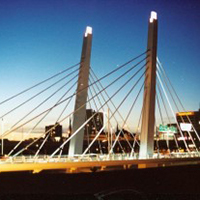
Drive, bike, or walk around the City of Milwaukee long enough and you will soon encounter one of our local rivers: the Menomonee, Milwaukee, or Kinnickinnic. However, navigating around the city and over these natural features requires innovative bridges that serve pedestrian, vehicular, and river traffic.
In the face of this threat, last winter the U.S. Army Corps of Engineers released its Great Lakes-Mississippi River Interbasin Study (GLMRIS) with no clear recommendation for next steps to prevent Invasive carp and other[...]